
World Cup Knockout Stage Brings Expanded Tournament Drama, While Ticket Prices Cool From Last Week’s Highs
The first expanded World Cup knockout stage is already delivering the kind of chaos FIFA hoped for when it grew…
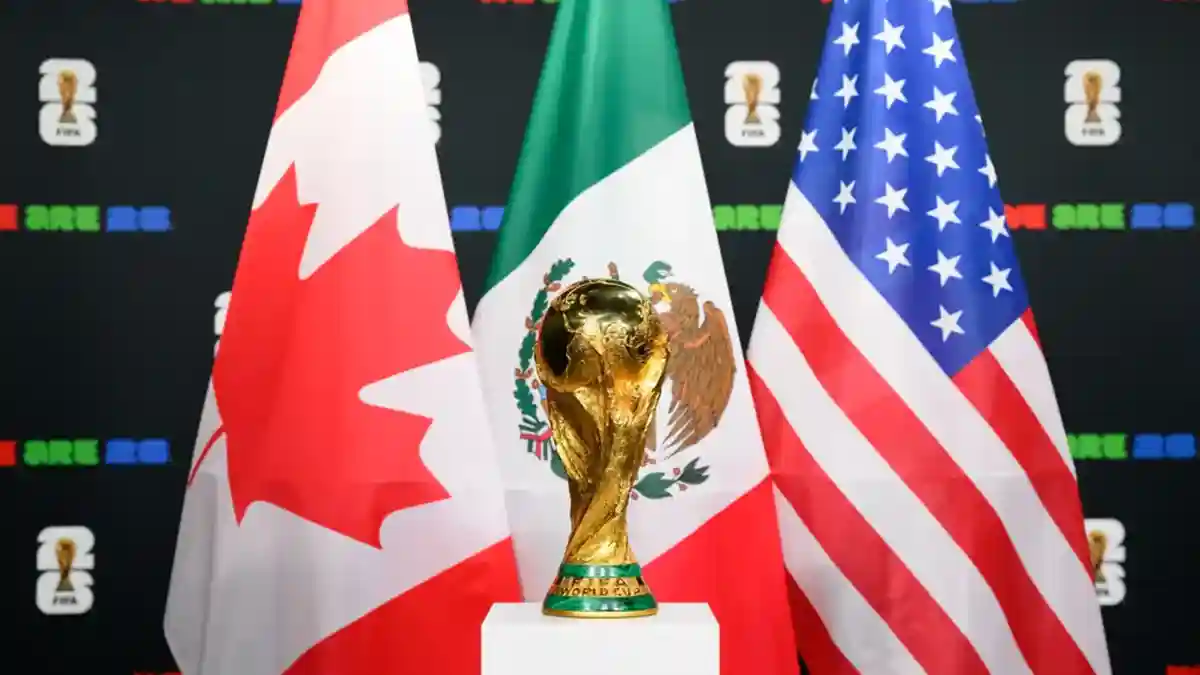
The first expanded World Cup knockout stage is already delivering the kind of chaos FIFA hoped for when it grew the tournament to 48 teams.
The new Round of 32 has added another layer of jeopardy to the tournament, giving fans more knockout games, more travel calculations, and more chances for underdogs to turn a monthlong event on its head. Through the opening wave of elimination matches, co-host Canada has already won its first knockout-stage game, Paraguay has stunned Germany, Morocco has knocked out the Netherlands, and several countries that had never before reached this point of a World Cup have turned the expanded field into something meaningful, defying critics who claimed the expansion was merely (another) money grab by FIFA.
Canada’s 1-0 win over South Africa gave one of the host nations a breakthrough moment, with Stephen Eustaquio scoring in stoppage time to send the Canadians into the Round of 16. It also set up a high-profile next-round match with Morocco, which advanced in dramatic fashion by beating the Netherlands on penalties after a stoppage-time equalizer forced extra time.
Paraguay’s penalty-shootout win over Germany produced an even bigger shock, knocking out a four-time champion and prompting Paraguay’s president to declare a national holiday. Brazil, meanwhile, survived Japan with a 2-1 win, while Norway moved past Ivory Coast. For a tournament that was always going to be judged in part by whether its expanded format created competitive depth or merely more games, the early knockout returns have been anything but dull.
The expansion has also produced genuine history for a number of national teams. Cape Verde, playing in its first World Cup, reached the knockout stage and now faces Argentina in Miami Gardens. DR Congo reached the knockouts for the first time, 52 years after its only previous World Cup appearance as Zaire. South Africa, Egypt and Ivory Coast also reached the knockout stage for the first time, while Canada advanced beyond the group stage for the first time and has now extended that run into the Round of 16.
African teams have been central to that story. A record nine African nations reached the Round of 32 — Morocco, South Africa, Senegal, Ivory Coast, Ghana, Cape Verde, Egypt, DR Congo and Algeria — a striking shift for a continent that had never previously placed more than two teams in the knockout stage of a single World Cup.
That combination of host-nation energy, major upsets, first-time knockout appearances and marquee teams still alive has kept tournament interest high. It has not, however, kept ticket prices climbing uniformly.
World Cup Ticket Prices: Material Reductions for Many Matches
TicketClub marketplace data provided to TicketNews shows that World Cup knockout-stage ticket prices have cooled substantially from last week’s highs, giving flexible fans more options as the Round of 32 moves forward. But the reset has not made the tournament cheap, and the biggest team-driven and host-nation matchups remain firmly in premium territory.
TicketClub’s June 30 inventory snapshot, covering remaining World Cup matches from June 30 forward, shows a current Round of 32 median asking price of $1,370, with a get-in price of $289. That is roughly flat compared with the immediate prior knockout-stage pull, but down sharply from the June 25 snapshot, when the early knockout market was still pricing closer to the initial spike that followed the bracket taking shape.
The broader knockout market has moved lower as well. On a same-event basis, TicketClub data shows Round of 16 median pricing down 40% from June 25, Quarterfinal pricing down 30%, Semifinal pricing down 26%, and the Third Place game down 25%. The Final has been far more resilient, with the current median down just 2% from June 25 and still sitting at $16,229.

Those figures are asking prices for available marketplace inventory, not completed sales. But the directional move is notable in a World Cup that has been defined as much by ticketing turbulence and price complaints as by the action on the field.
That market movement is also landing against the backdrop of a tournament that has already produced major consumer frustration around ticket fulfillment and delivery. TicketNews reported last week on the backlash surrounding failed StubHub orders and last-minute World Cup ticket cancellations, with fans describing tickets purchased months earlier that could not ultimately be delivered through FIFA’s mobile-ticketing system. StubHub has denied allowing speculative tickets and has argued that FIFA’s transfer rules and newly built tournament app contributed to delivery failures, while resale critics have used the episode to call for stricter regulation of secondary marketplaces.
An Evolving World Cup Ticket Market
Its clear that the World Cup ticketing market has gone through multiple evolutions. Earlier in the tournament, prices had already fallen from the very high early-year asking prices that appeared before matches began. As group play unfolded and possible knockout paths became clearer, prices firmed again, as buyer interest shifted from broad tournament attendance to specific teams, cities and bracket possibilities.
The June 30 data shows a reset from that spike. The movement is consistent with additional available supply, reduced uncertainty around some matchups and a more selective late-stage buyer market. Marketplace data alone cannot confirm the cause of the movement, including whether primary-market releases or pricing changes were the decisive factor.
The split inside the Round of 32 is especially important for fans. The top of the market is still led by major teams and host-nation demand, with Argentina, Mexico, Portugal and the United States accounting for some of the most expensive remaining early knockout games.
Argentina vs. Cape Verde in Miami Gardens currently has the highest remaining Round of 32 median asking price in the TicketClub snapshot at $2,951, with a $495 get-in. The match brings together the defending World Cup champions and one of the tournament’s most compelling underdog stories, giving it appeal beyond a simple mismatch on paper.
Mexico vs. Ecuador has a slightly lower median at $2,836, but the highest get-in price of the group at $1,490, reflecting a strong floor for El Tri’s home knockout match at Estadio Azteca. Portugal vs. Croatia in Toronto is also carrying premium pricing, with a $1,410 get-in and $2,108 median. United States vs. Bosnia-Herzegovina in Santa Clara remains one of the most expensive Round of 32 events, with a $1,171 get-in and $2,022 median, though its current median is far below where it stood last week.
That U.S. market is one of the more interesting cases in the June 30 data. TicketClub shows the median asking price for United States vs. Bosnia-Herzegovina down 49% from June 25, falling from $3,992 to $2,022. At the same time, the get-in price has risen from the prior pull to $1,171, suggesting that the lowest-cost entry point may have tightened even as the broader middle of the market moved lower.
Local Bay Area reporting has documented a similar cooling pattern around the U.S. match, with prices falling sharply after initially surging to levels compared with major domestic sports events. The dynamic underscores a key feature of this World Cup market: prices can move dramatically as matchday nears, but not always uniformly across the cheapest seats and the broader inventory base.
For fans without a fixed team or city preference, the Round of 32 now has more accessible options than it did last week. Switzerland vs. Algeria in Vancouver has a $337 get-in and a $606 median in the TicketClub data. Belgium vs. Senegal in Seattle has a $289 get-in and $632 median. England vs. DR Congo in Atlanta has a $570 get-in and $864 median, while Australia vs. Egypt in Arlington has a $585 get-in and $963 median.
Several of those matches also account for some of the steepest same-event declines since June 25. England vs. DR Congo is down 67% by median asking price, Switzerland vs. Algeria is down 66%, Belgium vs. Senegal is down 63%, France vs. Sweden is down 60%, and Australia vs. Egypt is down 55%. Spain vs. Austria, another marquee national-team matchup, is down 51%, with a current median of $1,581.

The later rounds have also moved lower, though they remain expensive by any ordinary standard. TicketClub’s June 30 snapshot shows Round of 16 median pricing at $2,770, Quarterfinals at $4,794 and Semifinals at $5,996. The comparatively low get-in figures for some future knockout rounds should be interpreted cautiously, since they may represent a limited number of lower-priced listings rather than the broader available market. The median remains a better signal for what a typical buyer may encounter across available inventory.
The Final remains the exception to the broader cooling trend. TicketClub shows the current Final get-in at $8,496 and the median asking price at $16,229. That is down slightly from the June 25 median of $16,609 and the prior pull’s $17,405, but it remains far above every other stage of the tournament.
That resilience fits with the larger story of a World Cup that has repeatedly tested the upper limits of live-event pricing. FIFA’s dynamic pricing approach, high official price points, official resale rules and ticket transfer systems have all drawn scrutiny during the tournament. FIFA also operates its own resale marketplace, which charges fees on resale transactions and remains the only channel through which FIFA says it can guarantee proper delivery.
For now, the consumer takeaway is more nuanced than “prices are falling.” Value has reappeared in parts of the knockout stage, particularly for flexible buyers willing to target less overheated Round of 32 matchups. But the tournament’s most desirable games remain expensive, the Final is still operating as a luxury-tier event, and the broader World Cup ticketing experience remains complicated by the same transfer, delivery and resale questions that have followed the tournament since group play.
The expanded World Cup has given fans more knockout drama, more new stories and more teams with a legitimate moment on the global stage. The ticket market is now reflecting that complexity rather than moving in one direction. Premium demand remains concentrated around Argentina, Mexico, Portugal, the United States and the Final, while more accessible pricing has reappeared for select Round of 32 matchups that have cooled sharply from last week’s highs.
Read next
More headlines

Jun 30, 2026
Ye, Red Rocks Shows and Fourth of July Concerts Lead This Week’s Hot Tickets
Holiday-week concert demand is being shaped by a mix of stadium-scale hip-hop, Red Rocks dates, Fourth of July fireworks programming…

Jun 30, 2026
Oak View Group, Mountain America Credit Union Announce Naming Rights Deal for Draper Event Center
Oak View Group and Mountain America Credit Union have announced a multi-year naming rights agreement for the new 5,000-seat event…

Jun 30, 2026
Fever, DICE Tout Record Year of Growth Following Merger
One year after joining forces, Fever and DICE are touting a year of rapid growth, highlighting a wave of new…